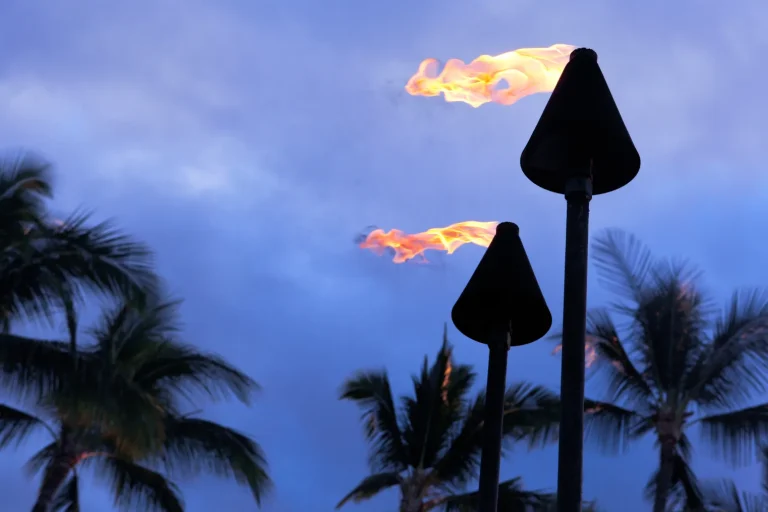
Torches hiss in the dark while dancers flash past in red skirts and gold light, and your camera has to keep up. You’ll get better luau shots when you start with the right lens, lock in a fast shutter, and balance aperture and ISO before the first drumbeat hits. A few smart setting changes can turn soft, muddy frames into crisp fire arcs and sharp faces from the middle of the crowd.
Key Takeaways
- Use Manual mode with f/2.8–f/4 and 1/320–1/500 s; raise shutter to 1/1000 s for fast fire action.
- Set ISO around 1600–6400, increasing only as needed; slight noise is better than motion blur in dim luau lighting.
- Use AF-C with dynamic focus points, back-button focus, and high-speed burst to capture dancers, spins, and fire at peak moments.
- Shoot RAW, meter for faces or flames, and apply –1 to –2 EV if highlights clip to preserve fire detail.
- Avoid Auto White Balance; set 2800–3500 K for warm firelight, or 4000–4500 K when mixed stage lighting appears.
Best Camera Settings for Luau Performances
Start with speed. In a luau, one of the first settings you should lock in is shutter speed. Set it to at least 1/320s so you can freeze dancers, swaying hips, and the quick flare of fire in dim light. Then open your aperture to f/2.8 for maximum light and clean subject separation. Push ISO to around 6,400, or higher if your camera handles noise well. Modern sensors can take it, and detail matters more than spotless shadows here. Keep white balance slightly warm, or leave it native, so the flames stay rich and the stage glow feels true. As the show builds, zoom in on your LCD and check sharpness and noise. Favor faster shutter and wide aperture over heavy noise reduction. Your photos will feel alive. Knowing the best timing at a luau also helps you anticipate brighter moments and stronger stage light for cleaner shots.
Choose the Best Lens for Luau Performances
You’ll get the most flexibility at a luau with a fast telephoto zoom like a 70–200mm f/2.8, since it lets you isolate dancers, hold clean subject separation on stage, and keep shooting when the light gets dim. If you’re working handheld from the audience, pick one with image stabilization so you can move from mid-stage views to tight close-ups while keeping shutter speeds fast enough to freeze swirling skirts and fire. Sharp glass matters too, because when you zoom in on shots made at ISO 6400, you’ll want those bright costumes and painted faces to still look crisp instead of a little mushy. When planning your coverage, think about what to film so your lens choice helps you capture both wide stage moments and tighter performance details.
Fast Telephoto Zoom
Reach for a fast telephoto zoom when the luau stage glows and the fire dancers surge into motion. A 70–200mm f/2.8 gives you reach, speed, and creative compression. At 70mm, you can frame the whole pulse of mid-stage action. Zoom to 200mm and isolate spinning torches at the edge. That constant f/2.8 aperture helps you hold 1/320s and ISO 6400 when the drums get wild. If you’re shooting on a phone, night beach photos settings can also help balance bright flames against the dark shoreline.
| Feature | Why it helps |
|---|---|
| 70–200mm range | Covers center and edge |
| Constant f/2.8 | Supports fast shutter speeds |
| Fast autofocus | Tracks sudden movement |
| Image stabilization | Helps handheld framing |
| Solid build | Aids weight balancing |
Choose strong optics and responsive handling. You’ll feel the heavier build during long sets, so steady your grip. Leave remote triggers packed.
Sharpness In Low Light
That fast telephoto zoom earns its keep when the luau lights drop and sharpness gets harder to hold. You’ll get the cleanest results with a 70–200mm f/2.8, especially handheld, because it gathers light fast and isolates dancers against glowing torches and creative bokeh. At events like Chief’s Luau, the Fire Knife Dance adds fast flame-lit motion that makes this lens choice even more valuable.
Shoot wide open at f/2.8 whenever you can. At longer focal lengths, that extra light helps you keep shutter speed near 1/320s, which matters for fire dancers and quick hula turns. Let ISO climb to 6400 on a capable body so detail stays strong and ambient textures still read well. Then do your part. Plant your feet, ease your breath, and press smoothly so camera shake doesn’t spoil the lens’s sharp look. You’ll also leave yourself cleaner files for color grading later, always.
Start With Manual Exposure
Set your camera to Manual so you control shutter speed, aperture, and ISO instead of letting bright flames and stage lights boss you around. You’ll want a fast shutter around 1/250 to 1/320 to catch the fire dancer mid-spin, then lock in a wide aperture like f/2.8 or f/4 to pull in light and keep the performer crisp against the dark stage. From there, you can raise ISO carefully, meter for the performer, and hold onto the glow without turning the night into a blur. If you’ve scored best seats, these settings become even more useful because a clear angle helps you capture sharper expressions and cleaner action.
Set Shutter Speed
Start in full Manual mode so you control shutter speed yourself from the first beat of the show. Aim for 1/250s to 1/320s as your everyday starting range. That gives you better shutter synchronization with fast spins, plus enough motion anticipation for dancers who suddenly surge toward the crowd. Your rhythmic timing matters too, because fire routines shift with the drums. At a Chief’s Luau Hula Show, watch for fast spins and sudden surges so you can time your shutter changes to the performance. If the performer is close or the action turns wild, jump to 1/500s to cut blur. With a 70 to 200mm f/2.8 on full frame, don’t drift below about 1/200s to 1/250s at the long end if you’re handholding. In dim light, protect shutter speed first and raise ISO to 3200 or 6400 if needed. Take early test shots, check flames and faces, then lock settings.
Lock Aperture Choice
Because luau light shifts fast from torch glow to dark sky, move into full Manual exposure and choose an aperture around f/2.8 to f/4 before the first big spin. That opening choice pulls in light, keeps backgrounds soft, and helps dancers pop against flame. Then lock it, so your depth of field stays steady while drums pound and sparks fly.
- Use aperture memory so your look stays consistent frame to frame.
- Check diaphragm calibration if your lens has seen heavy travel or salt air.
- If you use clickless mounting or a cinema-style ring, confirm nothing slips.
- On a Tamron 70–200mm, re-check and re-lock after zooming handheld.
Since Chief’s Luau start time can define when the brightest pre-show light fades into performance lighting, set your aperture before the show begins. Once aperture is fixed, preserve those warm stage tones and leave exposure behavior alone. White balance can wait. Your lens shouldn’t freeload tonight.
Control ISO Manually
Flip into full Manual exposure before the conch shell fades, then treat ISO as the dial that follows the night. Set aperture and shutter first so you control depth and motion. Maybe you choose f/2.8 on a 70 to 200mm and 1/320s to freeze a fire dancer’s spinning staff. Then use manual ISO to bring the scene into balance.
Your ISO workflow should start around 1600 to 6400 with modern cameras, then climb only if the dancers still look dim. Check the histogram and watch bright flame edges for clipping. If highlights blow out, don’t push ISO harder. Slow shutter a touch or stop down instead. Shoot quick tests at 1600, 3200, and 6400. Compare noise at 100 percent, then pick a fixed ISO for steadier results through the whole show. If you arrive early for the pre-show activities, use that time to test ISO and exposure before the main performance begins.
Set a Fast Shutter Speed
Choose a fast shutter speed and you’ll keep the luau’s energy crisp instead of smeared across the frame. Start around 1/250 to 1/500 sec for hula hands and fire dancers. If flames whip faster, or you’re zoomed longer, push to 1/1000 or even 1/2000 sec.
Use a fast shutter to keep luau motion crisp: try 1/250 to 1/500 sec, faster for flames or longer lenses.
- Try 1/320, 1/500, and 1/1000 sec during exposure experimentation.
- Follow the focal length rule handheld. At 200mm, stay at 1/200 sec or faster.
- Raise ISO if needed. A D700 handled ISO 6400 with little visible noise.
- Keep stage mood intact while checking background separation and creative silhouettes.
You’re freezing motion, not flattening the night. Watch the torches, listen for the drums, and review test shots between sets. A steady stance helps too, especially with a 70 to 200mm lens in humid ocean air. At venues known for menu, music, and island vibes, these settings help you preserve both the performers’ motion and the atmosphere around them.
Use a Wide Aperture
Open the aperture wide and the whole luau gets easier to photograph. At f/2.8, your 70–200mm pulls in more light, so you can hold a fast shutter for fire dancers and keep those warm flames rich. You’ll also get shallow focus, plus gentle background compression. If you want polished keepsakes beyond your own shots, the photo package can also be worth considering for professionally captured luau moments.
| Move | Why it helps |
|---|---|
| Use f/2.8 | Grabs light fast |
| Step back slightly | Keeps dancers aligned |
| Test f/4 too | Finds your lens sweet spot |
| Watch bokeh direction | Shapes flame blur |
Wide apertures need care. Keep performers at similar distances or back up to avoid aperture diffusion across the group. If edge sharpness matters, compare wide open shots with f/4 or f/5.6. You can fine-tune white balance later. For now, let the lens collect the glow, drums, and salt-air sparkle beautifully.
Raise ISO for Low Light
Raising ISO is what lets you keep pace when the sky goes dark and the drums get loud. For handheld luau action, push ISO to 6,400 when you need 1/320 to 1/500s. Pair it with your fastest aperture, ideally f/2.8 on a 70 to 200mm, so exposure stays usable.
When the drums rise and light falls, ISO 6,400 keeps handheld luau motion sharp without sacrificing the scene’s warmth.
- Raise ISO gradually, not blindly.
- Check files at 100% for noise.
- Keep warm firelight and stage color.
- Protect ambient storytelling and cultural context.
Modern full-frame cameras can keep ISO 6,400 surprisingly clean, especially with fast telephoto glass. You should test each step, then commit only when noise still looks acceptable. A little grain beats blur every time, and it keeps audience interaction, chanting, and swirling skirts sharp. Slight warmth is part of the mood, not a mistake for your final frames. If your luau is near the shore, stay aware of changing conditions and prioritize lifeguarded beach areas when moving around in low light.
Use Spot Metering for Fire Dancers
Track the flame, and your meter stops guessing. Switch to spot metering and aim it at the fire dancer or brightest flame. You’ll protect highlight detail in mixed stage light and keep torches from blowing out into featureless blobs. If you’re using a fast 70 to 200mm f/2.8, add minus one to minus two stops for richer flame texture and ambient storytelling.
At 1/320s handheld, spot meter the dancer’s face or torch, then let high ISO, even 6400, hold shutter speed. Use AE-L for consistent frames, especially during audience interaction, and recompose freely. Because spot metering ignores nearby lights, check histograms and blinkies often as performers move. Those quick checks support safety considerations too, since surprise brightness shifts can ruin a dramatic pass. Even seasoned shooters get singed, metaphorically. If the evening also includes an Imu Ceremony, expect a very different lighting rhythm than the fire segment.
Set White Balance for Warm Luau Tones
Dial in white balance before the first torch flares, and you’ll keep that signature luau glow instead of letting Auto WB cool everything into bland neutrality. Skip Auto and choose tungsten presets around 3200K, or set 2800 to 3500K manually for firelit scenes.
- Use 4000 to 4500K when blue washes mix with warm lamps.
- Protect skin tone retention while preserving ambient blue balance.
- Shoot RAW and leave white balance slightly warm for later tweaks.
- Build a custom setting from a neutral card or reference frame.
You’ll get steadier color as stage lights shift and crackle. If you need punchier marketing shots, nudge temperature up 200 to 500K or try a warming preset. Just watch highlights, because clipped flames look less magical and more like tiny suns having a tantrum. While fine-tuning color, remember respectful photos also means avoiding disruptive shooting habits that distract performers or the audience.
Use Continuous Focus for Moving Dancers
Switch to continuous-servo autofocus so your camera keeps up as dancers sweep across the stage and circle through firelight. Use AF-C for continuous tracking, then choose a dynamic AF area so nearby points rescue focus if a performer slips off your selected point. Pair that with 1/320s or faster and f/2.8, which helps the camera lock onto contrast and keeps bodies crisp against torchlit backgrounds. If you have VIP seating, your closer view can make continuous tracking easier as performers fill more of the frame.
| Setting | Why it helps | Try this |
|---|---|---|
| AF-C | Updates focus constantly | Enable while tracking |
| Dynamic area | Supports subject anticipation | Use 9 or 21 points |
| AF-ON | Improves focus customization | Use back-button focus |
Keep AF active only when you mean it. That simple move prevents random refocusing while dancers spin, stamp, and flash bright leis.
Shoot Burst Mode for Fire Dancers
When the fire dancers start to spin, you’ll want continuous high-speed burst on, your lens wide at f/2.8, and a shutter around 1/250 to 1/400s so the flames stay bright while motion snaps into place. You can track the dancer in AF-C, hold the camera steady in your hands, and start the burst just before the toss or turn, because the best flame trail often arrives a split second early. During the show, always follow luau photo etiquette so your shooting doesn’t distract performers or other guests. After each sequence, you can zoom to 100% and check which frame has the sharpest face, the cleanest arc of fire, and the least noisy shadows.
Time The Flame
Chase the moment, because fire dancers move fast and the best flame shapes appear for a split second. Watch rhythmic timing, respect safety protocols, and notice audience interaction as you prepare. Then let burst mode do the heavy lifting. If you’re photographing with an expectant mom nearby, choose seating with easy access and note that pregnant travelers generally find well-run luaus safe and enjoyable when they stay comfortable and follow venue guidance.
- Set continuous shooting to your camera’s fastest rate, often 5 to 8 fps.
- Use about 1/320 s, or 1/250 to 1/500 s, for crisp flame tongues.
- Track handheld with a 70 to 200mm f/2.8 and continuous autofocus.
- Raise ISO to 3200 or 6400 so your shutter stays fast.
Start firing just before the throw or swing begins. A short burst follows the flame arc without filling your card with near twins. You’ll catch glowing ribbons, sharp sparks, and that quick whoosh of heat that makes the whole beach lean in.
Capture Peak Action
Lean into burst mode and let the camera catch the split-second magic your eyes can’t quite hold. Set continuous high-speed burst at 5 to 9 fps so you catch the exact moment a fire dancer snaps, spins, and throws bright flame trails. Keep shutter speed between 1/250 and 1/500s. Go faster for sharp arcs, slower for a little streak and drama.
Pair burst shooting with AF-C and back-button AF so focus sticks as performers rush across the stage. Use f/2.8 to f/4 and ISO 3200 to 6400 to keep bursts fast without dark frames. A handheld 70 to 200mm lets you react quickly. Frame a bit wide and crop later. You’ll also be ready for crowd interaction, audience reactions, and even backstage portraits when the torches finally cool. If you’re photographing a premium event like the VIP Package, these settings also help you capture faster-paced guest moments and closer performer interactions.
Keep Luau Photos Sharp Handheld
Often, the easiest way to keep luau photos sharp handheld is to treat shutter speed as your top priority. Start around 1/320s, or faster, so dancers and fire stay crisp. Raise ISO until exposure looks right, even near 6400. A little noise beats blur every time.
- Use a 70–200mm f/2.8 and stay near f/2.8 to f/4.
- Tuck your elbows in and plant your stance before the drums kick up.
- Zoom a bit shorter for close action if shake starts creeping in.
- Meter on bright skin tones or fire, then lock exposure.
These choices preserve detail in faces, flames, and woven costumes. They also support audience candidness, background storytelling, and ambient rhythm without sacrificing sharpness. Think of it as giving your camera steady hands, minus the coconut oil. If you want added context shots before the show, the Chief’s Luau menu can inspire storytelling images that complement the performance coverage.
Compose Luau Performances From the Crowd
Set yourself up near the front or along an aisle, and you can frame the whole show without fighting a forest of phones and flower crowns. Arriving early for Chief’s Luau check-in also helps you claim one of those cleaner sightlines before the crowd fills in. From there, use a 70–200mm f/2.8 handheld so you can tighten from head-to-toe views to expressive mid-telephoto portraits. That reach helps you isolate dancers while still leaving room for smart foreground framing.
Compose for audience interaction, not just the stage. Catch a smiling guest, a lei at the frame edge, or torchlight reflecting on faces for ambient storytelling. Meter for the performers with spot or center-weighted metering so skin tones and fire highlights stay rich. Keep white balance off full auto if you want that warm island glow. You can crop later, but strong in-camera framing saves you from awkward palm fronds and surprise selfie sticks.
Reduce Noise and Motion Blur
Good framing gets you close to the action, but clean detail comes from controlling blur and noise once the drums speed up and the fire knives start to arc. Skip long exposure techniques here. You’ll get sharper results with settings that match the pace.
Clean detail comes from matching your settings to the motion, not stretching exposure once the performance speeds up.
- Set shutter speed around 1/320 to 1/500s handheld.
- Open your lens wide, like f/2.8, to pull in light.
- Raise ISO to 3200 or 6400, then zoom in and judge noise.
- Use steady posture, slight bracing, and gear based stabilization when possible.
Shoot RAW, and underexpose a touch so flames keep their shape and color. In post, apply targeted cleanup, not a plastic blur bath. multi frame denoising can help if you catch short bursts with similar framing. Stay close enough to avoid heavy cropping, which makes noise louder. If you have premium seating, use that closer vantage point to reduce cropping and keep image quality stronger in low light.
Frequently Asked Questions
Can I Photograph a Luau Performance With a Smartphone?
Yes, you can photograph a luau performance with a smartphone low light mode if you use stabilization techniques, avoid portrait mode, lock exposure, and brace your phone to reduce blur, noise, and blown fire highlights.
Are Tripods or Monopods Allowed at Most Luau Venues?
No, you usually can’t use tripods at most luau venues because camera restrictions and venue policies often ban them. You may get monopod approval sometimes, but you should ask ahead and consider equipment alternatives instead.
How Should I Protect My Camera From Beach Sand and Humidity?
Protect your camera with sealed gear or weatherproofing spray, use lens caps during quick downward lens changes, clean off sand after shooting, and store everything in a hard bag with silica packets to fight moisture.
What Etiquette Should I Follow When Photographing Performers and Guests?
Like a respectful shadow, you should Ask permission first, Respect distance from performers and guests, and Minimize flash. Stay low, move between songs, avoid blocking views, honor boundaries, and delete requested images when possible.
Should I Shoot RAW or JPEG for Luau Performance Photography?
You should Shoot RAW for luau performance photography because you’ll preserve highlights, shadows, and white balance flexibility. If you need a Fast Workflow, use RAW+JPEG. You’ll also strengthen your Backup Strategy by keeping editable originals.
Conclusion
Just as the drums rise and a torch arcs into the dark, your settings come together too. You’ve got the fast shutter, the wide aperture, and the steady grip that keeps faces crisp and flames bright. From a seat in the crowd, you can catch flying sparks, flower leis, and bare feet hitting the stage. Shoot RAW, trust your histogram, and stay curious. The best luau photos often happen a split second before you expect them.